
Recipe: Shredded Chicken
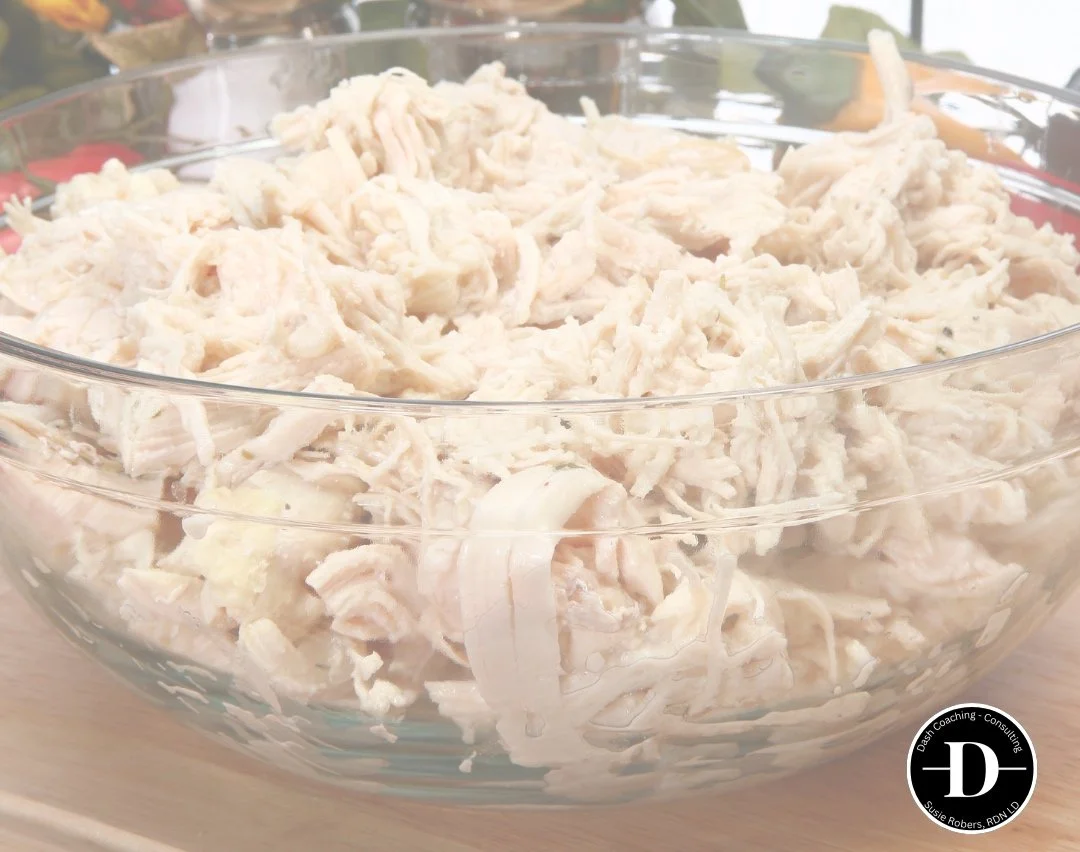
Two chicken breasts can easily turn into 4 to 8 meals which makes it a great meal prep ingredient! Simmer the chicken breasts over medium heat for 20 minutes then shred them with a mixing machine. Refrigerate or freeze for later use.
Shredded Chicken
INGREDIENTS
2 chicken breasts
8 cups water
seasonings: salt, pepper, bay leaf, thyme
INSTRUCTIONS
Place the chicken breasts, seasonings and water in a large Dutch oven pan. Bring the water to a boil, then lower the heat to a simmer.
Cook the chicken breasts for 20 minutes or until they are done. Drain off the broth, reserving for later use.
Place the chicken breasts in a mixing machine with a paddle or hand beaters and beat until the chicken is shredded.
Use for a variety of dishes including grain bowls, salads, soups, sandwiches, pasta, or sliders.
Freeze any leftovers in freezer containers.
Serves 5-6. Each 3 ounce serving: 86 calories, 2 g fat, 0 g saturated fat, 48 mg cholesterol, 103 mg sodium, 0 g carbohydrate, 0 g fiber,
0 sugar, 16 g protein
Meal Prep Tip: Shredded Chicken
Using shredded chicken breast can offer several advantages:
Versatility: Shredded chicken breast can be used in a wide variety of dishes, including salads, sandwiches, wraps, soups, tacos, casseroles, and more. Its neutral flavor makes it adaptable to different cuisines and flavor profiles.
Quick Cooking: Chicken breast cooks relatively quickly compared to other cuts of meat. Shredding it after cooking allows for even faster preparation of meals.
Lean Protein: Chicken breast is a lean source of protein, which is essential for building and repairing tissues, supporting immune function, and maintaining muscle mass.
Low in Fat: Compared to other parts of the chicken, such as thighs or drumsticks, chicken breast is lower in fat. Shredding it removes any visible fat, making it an even leaner option.
Nutrient-Rich: Chicken breast is rich in essential nutrients like vitamins B6 and B12, niacin, phosphorus, and selenium, which are important for overall health and well-being.
Meal Prep: Shredded chicken breast is ideal for meal prep because it can be cooked in large batches and stored in the refrigerator or freezer. It can then be easily added to meals throughout the week for quick and convenient lunches or dinners.
Kid-Friendly: Shredded chicken breast is often well-received by picky eaters, including children, due to its tender texture and mild flavor.
Weight Management: Because chicken breast is low in fat and calories, it can be incorporated into balanced meals that support weight loss or weight maintenance goals.
Overall, using shredded chicken breast can contribute to a healthy and convenient cooking experience while offering numerous nutritional benefits. Check out the amount of sodium in most deli meats and consider that shredded chicken is only 86 mg per 3 ounces.
Cooked chicken breast: 103 mg sodium

Chicken Salad Rice Bowl Ingredients:
1/2 cup cooked brown rice
1/2 cup shredded cooked chicken breast
1/4 cup purple radish, cut in slices
1 tomato, cubed
1/2 avocado cubed
1 tablespoon red onion
1/2 cup greens: pea shoots, lettuce, spinach, or kale
1 tablespoon Italian dressing
Directions:
Place the rice in the bottom of a bowl. Top with all of the ingredients and sprinkle with dressing. Enjoy!
Serves 1; Each 2 cup serving: 472 calories, 24 g fat, 4 g saturated fat, 52 mg cholesterol, 240 mg sodium, 40 g carbohydrate, 13 g fiber, 6 g sugars, 27 g protein.